In the overall communication architecture of HSSN, each transaction initiated by the user that requires a gas fee can involve up to four roles in the distribution of this gas fee: the Grid node that receives the user’s transaction request, the validator node of the HSSN layer responsible for managing and transmitting transaction information, the official node of the sonic grid, and the Solana base layer.
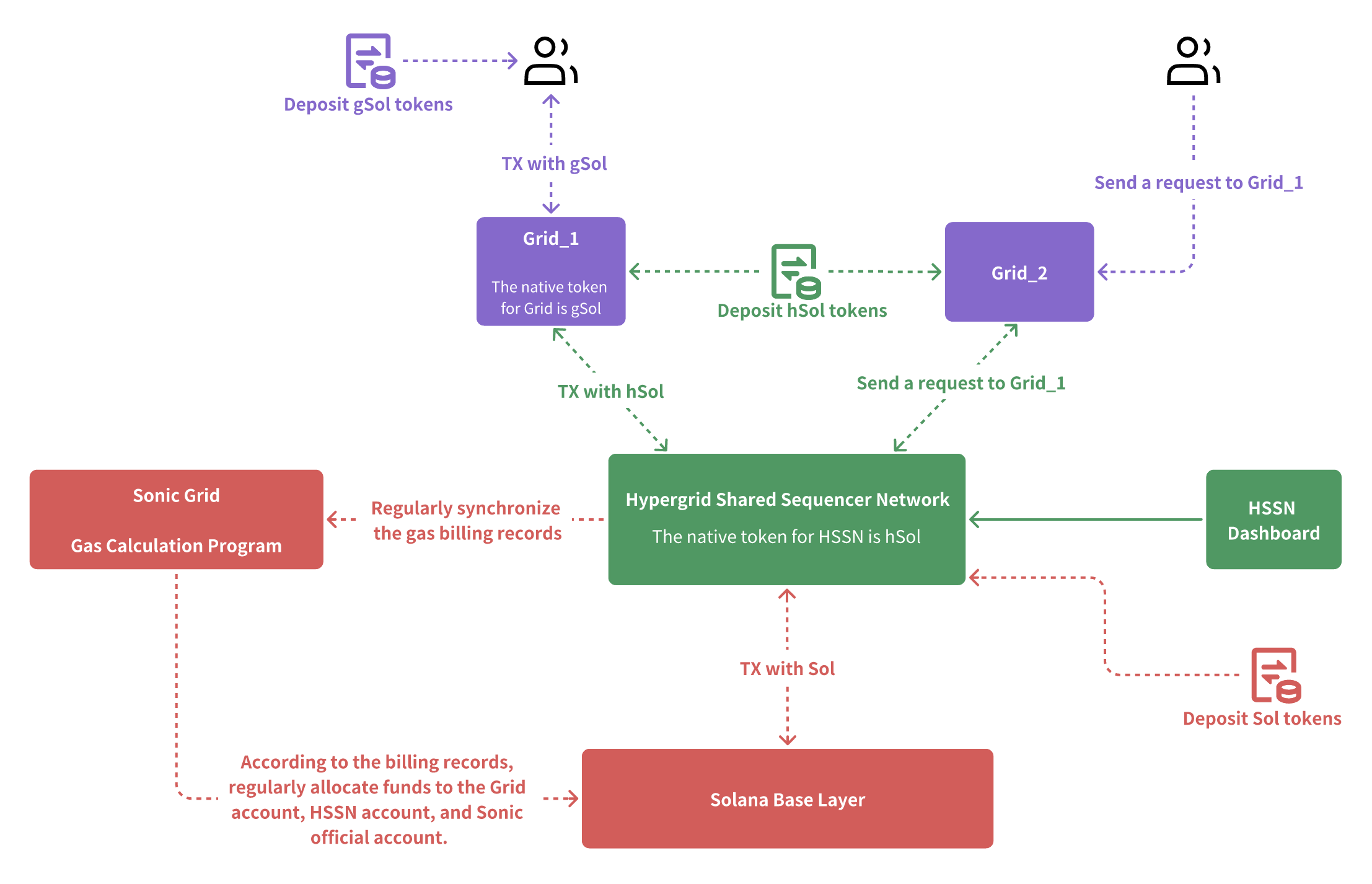
1. Transaction Request and Bill Generation
When a Grid node receives a transaction request initiated by a user, it first calculates the gas fee required for the transaction. The Grid node then distributes this gas fee among all participating nodes according to predefined allocation rules. These nodes include the Grid node handling the user’s request, the validator node of the HSSN layer responsible for managing and transmitting transaction information, the official node of the sonic grid, and the Solana base layer node. After the allocation calculation is completed, the Grid node generates a detailed bill record.2. Bill Forwarding and Viewing
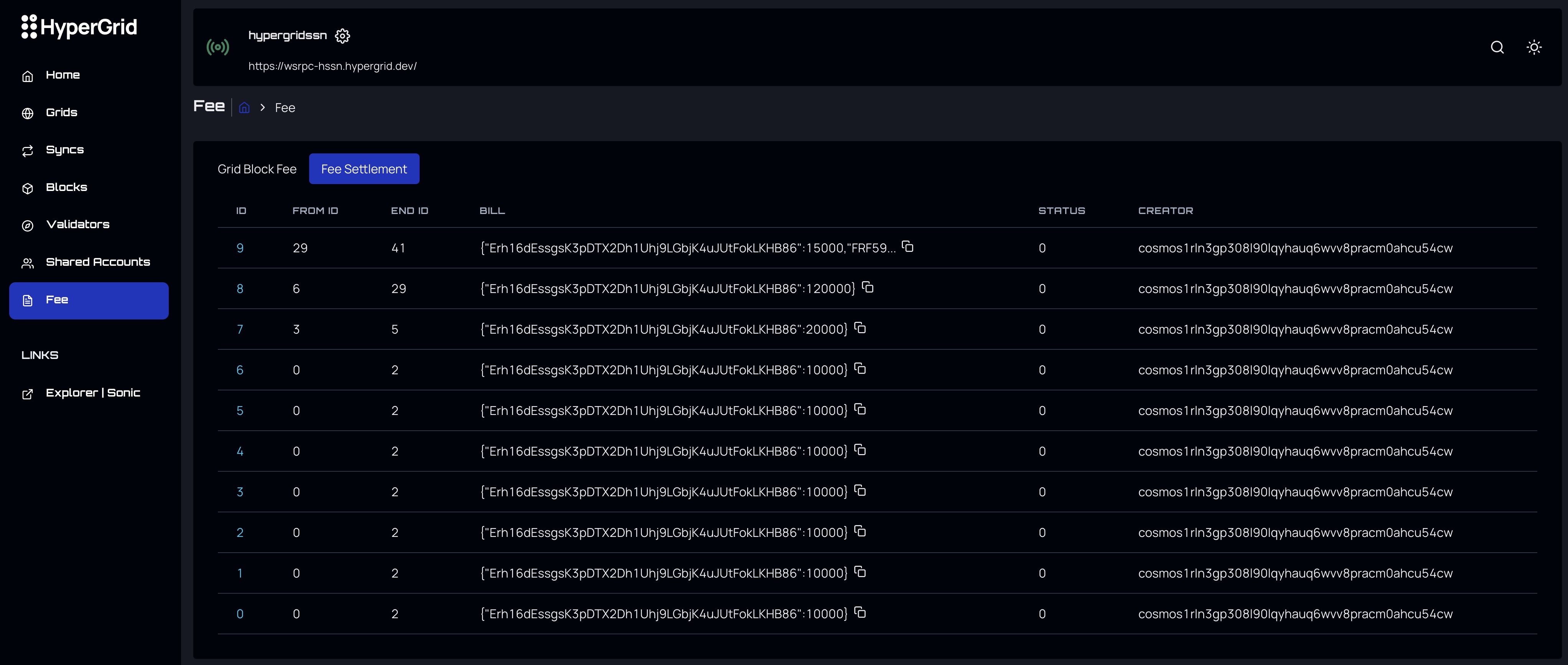
All Grid nodes run a program called hypergrid-aide, which is responsible for periodically forwarding the gas fee bills generated by the Grid nodes to the validators of the HSSN. During this process, users can view the transaction order details related to the bill by visiting the Grid Block Fee tab on the HSSN Dashboard at https://explorer-hssn.hypergrid.dev/fee.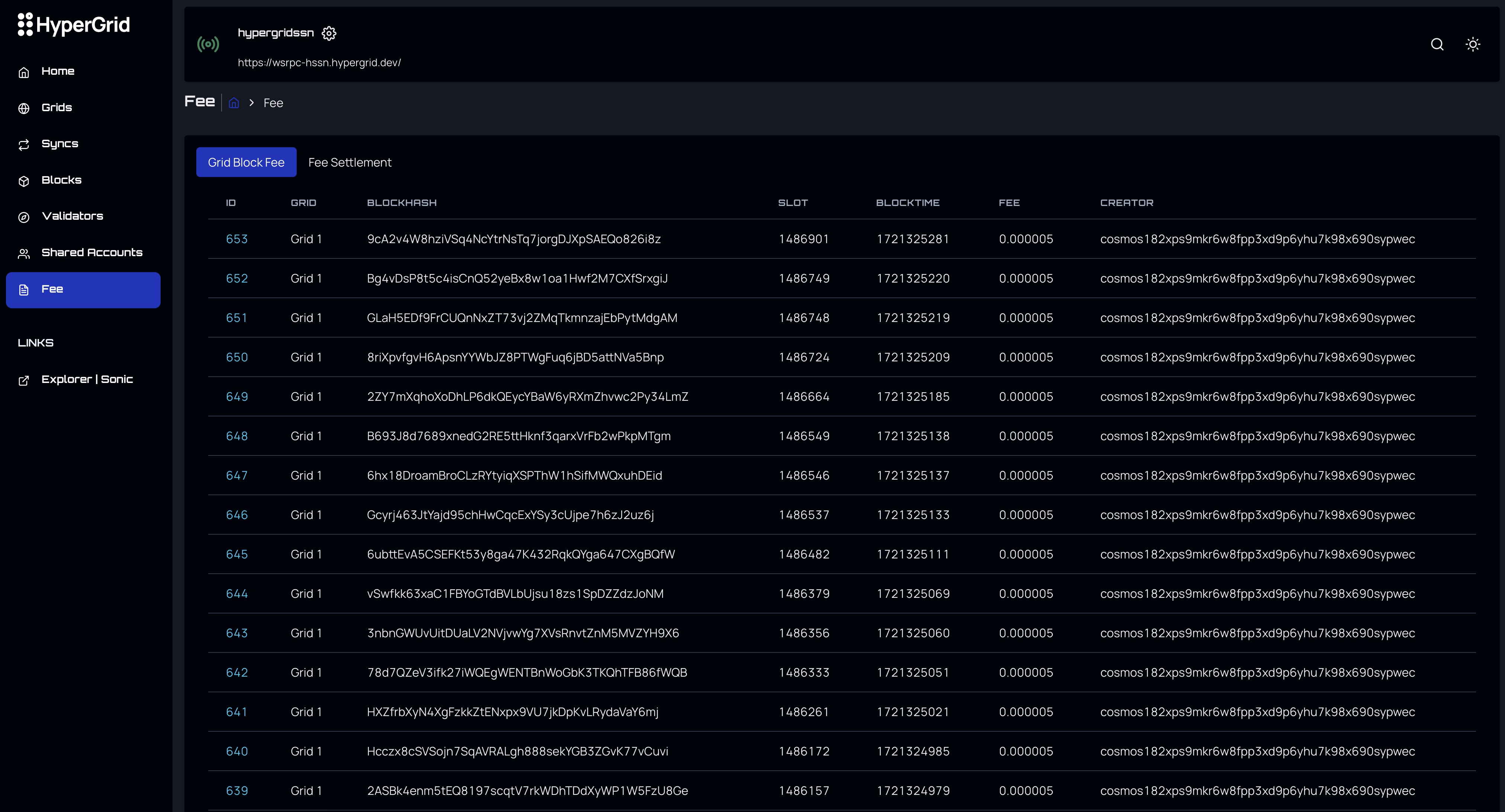
3. Execution and Viewing of Bills by Sonic Grid
The sonic grid is a special service node responsible for packaging the bills forwarded to the validators of the HSSN and periodically executing these bills in batches. After the sonic grid executes a range of bills, users can view the transaction details related to these packaged and executed bills by visiting the Fee Settlement tab on the HSSN Dashboard at https://explorer-hssn.hypergrid.dev/fee.